

Smartphone Heat Dissipation Myths: Does A Full-Body Back Film Cause Overheating And Throttling?
Mar 02, 2026
Leave a message

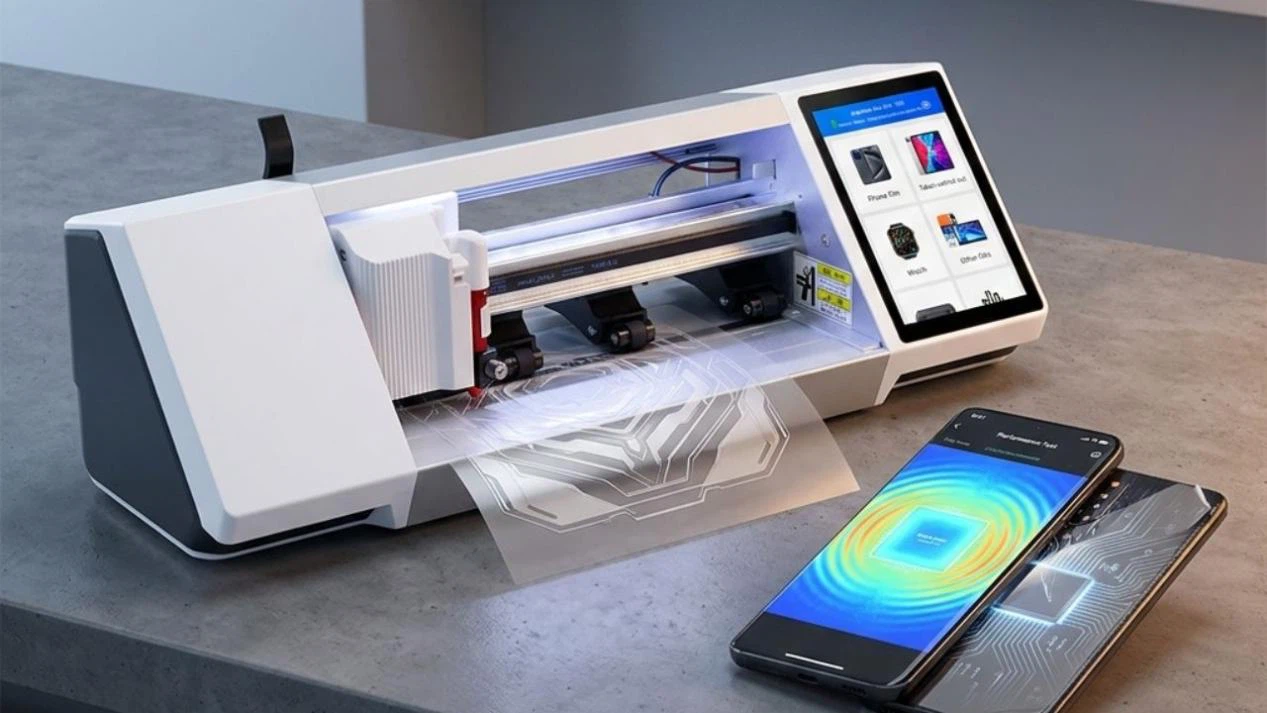
In an era where mobile performance is peaking, heat management has become a top priority for gamers and power users alike. A common debate has surfaced in mobile accessory shops: Does applying a full-body back film act like a "thermal blanket," trapping heat and causing the phone to throttle or lag?
Today, we're breaking down the science of heat dissipation to separate fact from fiction.
1. The Physics of Cooling: Conduction vs. Insulation
Many users believe a "naked" phone dissipates heat fastest. While technically true, the reality of modern smartphone thermals is more nuanced. Heat is moved from the internal CPU via vapor chambers (VC) and graphite sheets to the frame and back panel.
Material Thickness: Most premium back films (TPU, EPU, or textured skins) are only 0.1mm to 0.2mm thick.
The Reality: At such a microscopic thickness, the thermal resistance added by a film is negligible. Compared to a thick silicone or plastic protective case-which acts as a genuine insulator-a high-quality back film allows for significantly better thermal exchange with the environment.
2. Why Does the Phone Feel "Warmer" After Applying a Film?
It's a common paradox: if the phone feels warm to the touch, the cooling system is actually working. When heat reaches the surface of the film, it means the thermal energy is being successfully conducted away from the internal components. The real danger is a phone that feels "cool" on the outside while the system lags-that indicates heat is trapped inside the core, unable to escape.
3. Precision is the Real Key to Thermal Management
The biggest culprit in overheating isn't the film material itself, but poor fitment. If a generic, mass-produced film blocks specific ventilation gaps or interferes with internal thermal sensors, it can trigger the software to throttle the performance.
This is where On-Demand Precision Cutting changes the game for retailers and users.
Industry Insight:
To achieve the perfect balance between protection and performance, cutting accuracy is non-negotiable. The Purcell H310 Pro Smart Film Cutting Machine is engineered for this exact challenge.
With a cutting accuracy of +/- 0.1mm and a stable stepper motor, the H310 Pro ensures every back film is a perfect architectural fit for the device. Whether you are processing 3H to 9H high-hardness films, TPU, or UV films, the H310 Pro uses its built-in HD camera for QR code scanning and accurate positioning, ensuring no cooling zones are obstructed.
Purcell H310 Pro Core Specifications:
Max Cutting Speed: 500mm/s
Max Cutting Pressure: 1500g (Supports 9H Films)
Interface: 7-inch HD Touch Screen
Connectivity: WiFi & Smart Cloud Database
Accuracy: +/- 0.1mm
4. Lab Results: Does Throttling Actually Occur?
In standardized stress tests (running heavy titles like Genshin Impact or PUBG for 60 minutes), the difference in internal CPU temperature between a naked phone and one with a high-quality TPU back film is usually less than 1 to 2 degrees Celsius.
Modern mobile chipsets typically don't trigger thermal throttling until they hit specific thresholds (often around 80C to 90C internally). A thin, precision-cut film simply does not provide enough thermal mass to push a phone over that edge.
Conclusion
Does a back film cause performance drops? The short answer is: No.
The benefits of protecting your device from scratches, fingerprints, and daily wear far outweigh the nearly invisible impact on thermals. However, the quality of the cut matters. By using advanced equipment like the Purcell H310 Pro, shops can offer customers a "second skin" that protects the hardware without compromising the user experience.